
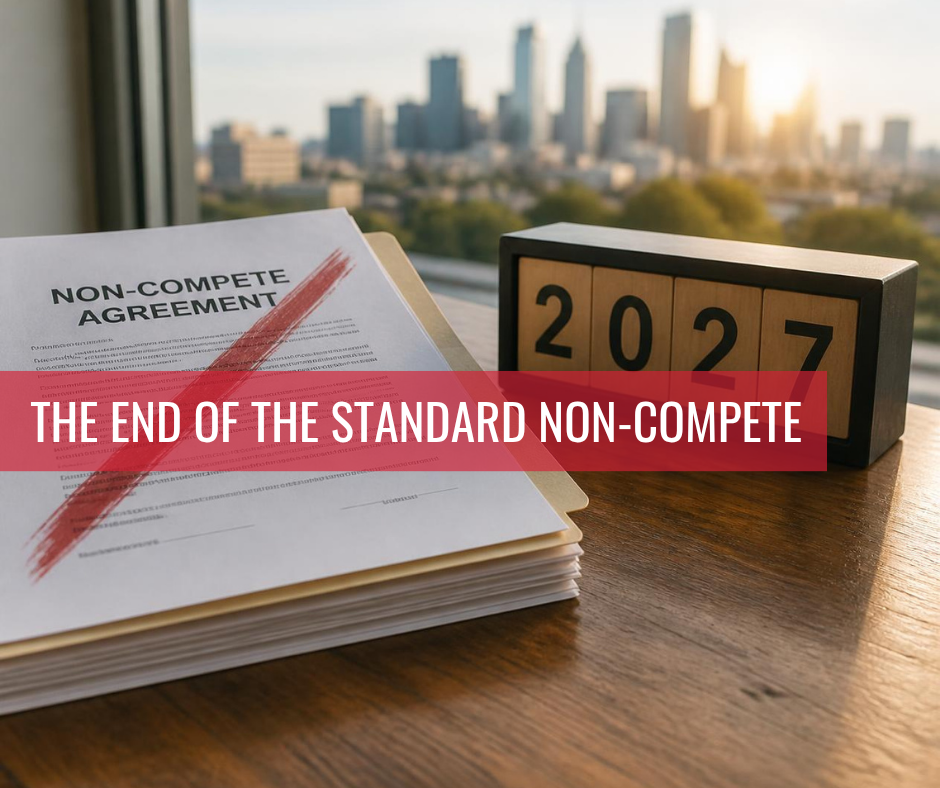
There is a clause in almost every Australian employment contract that most employers have never tested, many could not enforce, and a great number are about to lose.
The Government has announced that from 2027 it will ban non-compete clauses for workers earning below the Fair Work Act high-income threshold, and prohibit wage-fixing and no-poach agreements between businesses. The reforms are not law yet. But the work they require — identifying which of your protections actually protect you — takes longer than the legislation will.
What’s the real issue?
The real issue is that most employers have been relying on a clause for reassurance rather than protection.
Non-compete clauses are used far more widely than they are enforced. They appear in contracts for roles with no access to confidential information, no client relationships and no realistic capacity to damage the business. They are drafted uniformly, applied uniformly, and rarely reviewed. Many would already fail the existing common law test.
When the ban arrives, employers in that position will discover two things at once: that the clause they were relying on is void, and that they never built the protections that would have survived.
The organisations that come through this well are the ones that ask a different question now — not “how do we stop people leaving?” but “what specifically are we protecting, and what is the right instrument to protect it?”
What this looks like in practice
An anonymised composite, not a real client.
A Queensland professional services business used one employment contract template across the organisation. It contained a twelve-month, statewide non-compete, applied identically to a senior client-facing director and a part-time administrative assistant.
A senior consultant resigned and joined a competitor, taking three significant client relationships with her.
- The non-compete was the wrong tool. Twelve months and statewide was almost certainly broader than reasonably necessary to protect a legitimate interest, and enforcement prospects were poor. Under the proposed reforms, if she had earned below the threshold, it would have been void outright.
- The non-solicitation clause was weak. It was a single line, undefined, and did not identify the client connections it was protecting.
- The confidentiality clause was serviceable — but the business could not evidence what she had accessed, when, or what she took, because there was no exit process and no access logging.
- There was no garden leave provision, so she worked her notice inside the business with full client contact.
The clause the business trusted was the one that was least likely to help. The clauses that could have helped were the ones nobody had invested in.
What does the law say — and what is proposed?
The current position: restraints are void unless reasonable
At common law, a post-employment restraint of trade is presumptively void as contrary to public policy, and enforceable only to the extent it is reasonably necessary to protect a legitimate business interest. Courts assess the interest being protected, and the duration, geographic scope and scope of activity of the restraint. New South Wales operates a statutory overlay under the Restraints of Trade Act 1976 (NSW), which allows a court to read a restraint down; elsewhere, careful cascading drafting does similar work.
The practical position today is therefore already demanding. A broad restraint applied to a junior employee with no protectable interest attached to them is unlikely to be enforced. The reforms will make that unenforceability automatic rather than argued.
The proposed reforms: three prohibitions
Announced in the 2025–26 Budget, the package includes:
- A ban on non-compete clauses for workers earning below the Fair Work Act high-income threshold (currently $190,100 as at 1 July 2026, indexed annually). The Government has indicated this would affect around three million workers (who currently have non-competes and earning below the threshold).
- A ban on wage-fixing agreements — arrangements between businesses to cap or set the wages of their workers.
- A ban on no-poach agreements — arrangements between businesses not to hire each other’s staff. These are to be addressed as a competition law matter, closing what the Government has described as a loophole.
What remains under consultation
Several important questions are not settled:
- Non-solicitation clauses for clients and co-workers — under consultation, with no announced ban.
- Non-competes for high-income workers — under consultation; the position above the threshold may be clarified or narrowed rather than prohibited.
- Exemptions, including how the ban applies to independent contractors and whether any small business carve-out will exist. Notably, no small business exemption has been announced.
- Penalties and transition arrangements.
Timing and retrospectivity
The reforms are expected to take effect from 2027, following consultation and passage of legislation, and to operate prospectively — that is, they are not intended to apply to contracts entered into before commencement. Transitional arrangements are still being developed.
Two cautions follow. First, this is not law. Do not tell employees their restraint is void, and do not remove protections on the assumption of a legislative outcome that has not arrived. Second, prospective operation is not a reason to relax: any employee you hire, promote or re-contract after commencement will be caught, and in most organisations that is a large proportion of the workforce within a few years.
Why the competition law angle matters more than employers think
The wage-fixing and no-poach prohibitions are a different kind of risk. Non-compete clauses are a contract question between an employer and an employee. Wage-fixing and no-poach arrangements are agreements between competitors — and competition law penalties are of a different order of magnitude from employment law remedies.
The exposure is highest where employers in the same sector talk to each other: industry associations, franchise networks, employer groups, regional employer forums, and informal understandings between neighbouring businesses not to approach each other’s staff. Conduct that has felt collegial for years may become unlawful, and in some forms may already be problematic.
What are the risks and pain points for employers?
- Discovering the gap at the worst moment. Most employers only test a restraint when a key person leaves for a competitor — which is precisely when there is no time to fix the drafting.
- Over-reliance on a single clause. A non-compete is the least enforceable of the tools available and, for most of your workforce, is about to be unavailable.
- Template uniformity. Applying the same restraint to every role is the clearest indicator that no legitimate interest analysis was ever done — and it weakens enforceability against the people it should catch.
- Competition law exposure from informal arrangements. No-poach and wage-fixing understandings often exist as norms rather than documents, which makes them easy to overlook and hard to unwind.
- Contractor grey areas. How the ban applies to independent contractors, particularly individuals working through their own companies, remains unresolved.
- Reacting too early. Stripping restraints out of contracts now, before the legislation exists, gives away protections you currently hold.
- Retention risk you never priced. If a restraint has been doing your retention work, its removal exposes whatever else is (or is not) keeping people.
Our top five tips: what every employer should do
- Map your protectable interests role by role — not clause by clause. For each role, ask what you would actually lose if the person joined a competitor tomorrow: confidential information, client connections, key supplier relationships, technical know-how, team stability, or nothing. Most organisations find that a genuine protectable interest exists for a small minority of roles. That map, not your template, should drive your drafting.
- Identify who sits below the high-income threshold — and treat those restraints as already fragile. Run the list. For employees below the threshold with a non-compete, assume the clause is heading for unenforceability and that in many cases it is weak today. Redirect the protection to instruments that will survive, rather than hoping the clause holds.
- Invest in the protections that are not affected. These reforms target non-competes, wage-fixing and no-poach agreements. They do not target: properly drafted confidentiality obligations; intellectual property assignment; notice periods and garden leave; non-solicitation of clients and co-workers (currently under consultation, not banned); post-employment duties in relation to company property and data; and, for genuinely senior people, deferred remuneration or equity vesting structures. Each of these does more real work than a broad non-compete ever did.
- Audit your industry conversations for wage-fixing and no-poach risk. Review any arrangement, formal or informal, with other businesses about pay levels or about not approaching each other’s employees — including anything discussed in association meetings, franchise networks or regional employer groups. Take advice now. This is the element of the package with the most serious penalties and the least employer awareness.
- Fix the exit process, because that is where value is actually lost. Restraints are litigated; exit processes prevent the loss. Implement a structured departure protocol: written acknowledgement of continuing confidentiality and IP obligations, return of all property and data, removal of system access on the day, a record of what was accessed and downloaded in the final period, and a considered decision on garden leave. In our experience this protects more value than any restraint clause.
Frequently asked questions
Are non-compete clauses banned now?
No. The ban is a Government proposal announced in the 2025–26 Budget, expected to take effect from 2027 after consultation and legislation. Existing law continues to apply: a restraint is void unless reasonably necessary to protect a legitimate business interest.
Who will the ban cover?
As proposed, workers earning below the Fair Work Act high-income threshold — currently $190,100 as at 1 July 2026 and indexed annually. The position for workers above the threshold remains under consultation.
Will it apply to our existing contracts?
The reforms are intended to operate prospectively, so contracts entered into before commencement are not expected to be caught. Transitional arrangements are still being developed, and any employee you hire or re-contract after commencement would be covered.
Are non-solicitation clauses being banned too?
Not as announced. The Government has said it will consult further on non-solicitation clauses for clients and co-workers. For now they remain available — and for most employers they are a more useful and more enforceable protection than a non-compete.
What is a no-poach agreement, and why is it treated so seriously?
It is an arrangement between businesses not to hire each other’s employees. Because it is an agreement between competitors rather than a term of an employment contract, it is being addressed under competition law, where penalties are substantially more severe than typical employment law remedies.
Could an informal understanding between two local businesses be a problem?
Potentially, yes. These arrangements often exist as unwritten norms rather than documents, particularly within industry associations and franchise networks. The absence of a written agreement does not necessarily put the conduct outside competition law. Take advice.
Should we remove non-compete clauses from our contracts now?
No. They remain lawful and, where properly drafted and genuinely necessary, enforceable. The right response is to review which clauses are doing real work, narrow them to what is reasonable, and build up the alternative protections — not to give away rights you currently hold.
Is there a small business exemption?
None has been announced. Exemptions, including the treatment of independent contractors, remain under consultation.
How do we protect client relationships if we cannot use a non-compete?
Through a combination of a properly defined non-solicitation clause, robust confidentiality obligations covering client information, notice periods and garden leave to create separation before the employee reaches the market, a disciplined exit process, and — most effectively — client relationships held institutionally rather than by one individual.
How Harrisons can help
Get restraints wrong and you find out at the worst possible moment: a key person has gone, the clause you relied on is unenforceable, and the protections that would have worked were never drafted. Get it right and you protect what actually matters, with instruments that survive the reforms.
We help Australian employers — SME business owners, Queensland local government councils, and community and not-for-profit organisations — do exactly that:
- Audit your contract templates and restraint clauses role by role against genuine protectable interests.
- Redraft the protections that will survive — confidentiality, intellectual property, notice and garden leave, and properly defined non-solicitation.
- Review wage-fixing and no-poach exposure, including informal industry arrangements, before the competition law prohibitions bite.
- Build a defensible exit process that protects your information and relationships in practice, not just on paper.
Don’t wait until a key employee resigns to find out what your contract is worth. Get in touch with our team today and start with a post-employment restraints and contract template review.
This article provides general information for Australian employers and is not legal advice. The reforms described are proposed and not yet law; their final scope, timing and transitional arrangements may differ. For advice tailored to your organisation, contact Harrisons.

Claire Harrison is the Founder and Managing Director of Harrisons, a flourishing HR consulting business that sprouted in 2009 from Claire’s passionate belief that inspiring leaders and superstar employees are the key success factor to any business. With over 20 years’ experience, Claire has worked as a HR Director of multi-national organisations, as a Non-Executive Board Director, and a small business owner. Claire’s corporate career includes working with companies such as BHP, Westpac, Fonterra and Mayne Nickless.