I’ve had the same conversation twice this week.
Once with a childcare client — a capable, committed team doing genuinely good work with children every day. And again at the Local Government People & Safety Conference, standing in a room full of HR professionals and people managers from councils across Queensland. In both conversations, the pressure was felt.
These organisations want to do the right thing. They’re asking the right questions. But the reality of what the law now requires — and how much work there is to do — is only just hitting home.
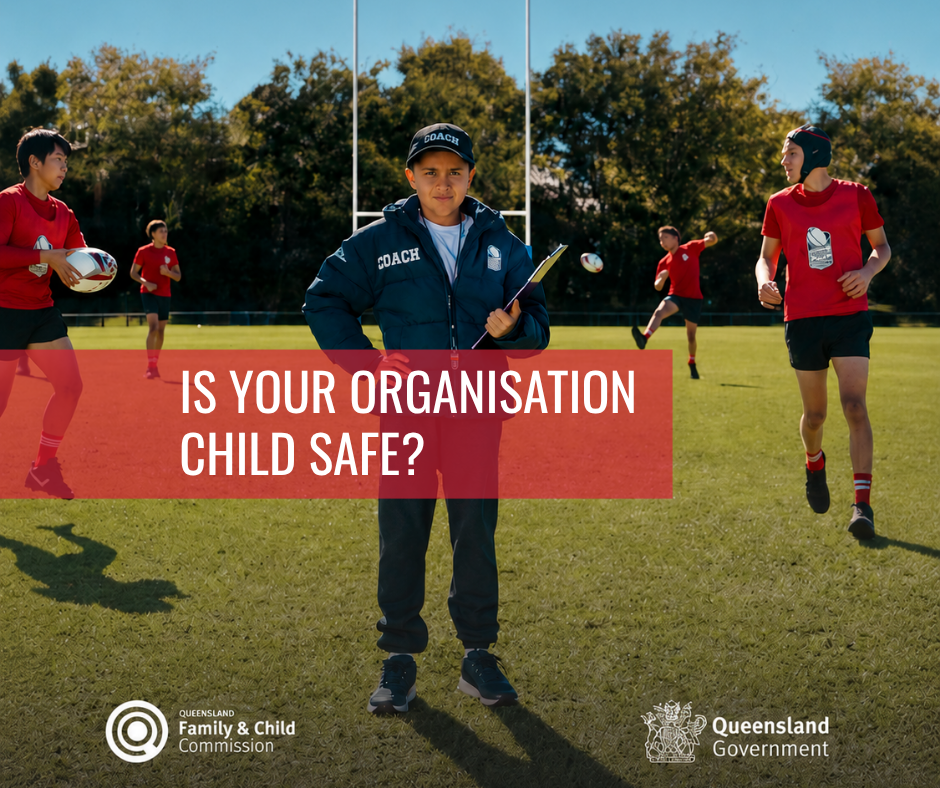
If your organisation works with children, provides services for them, or gives them access to your facilities, Queensland’s child safeguarding laws have fundamentally changed your legal obligations. The question is no longer whether you need to act — it’s whether you already have.
The Law Has Changed: What You Need to Know
Queensland’s Child Safe Organisations Act 2024 came into effect from 1 October 2025. It is the most significant overhaul of child safeguarding obligations for employers and organisations in Queensland’s history — and it applies to approximately 40,000 organisations across the state.
The Act creates two distinct but complementary obligations that work together to protect children:
- The 10 Child Safe Standards — mandatory for all organisations that provide services or spaces specifically for children
- The Reportable Conduct Scheme — a legal duty to report and investigate allegations of child abuse or misconduct by staff and volunteers, which came into effect on 1 July 2026
The Queensland Family and Child Commission (QFCC) is the independent oversight body responsible for administering and enforcing the system. For authoritative information, including self-assessment tools and implementation guidelines, visit qfcc.qld.gov.au/childsafe.
Does This Apply to Your Organisation?
The Act applies to organisations that provide services or spaces specifically for children — meaning some or all of their services, activities or programs are aimed at children, or have a special application for children in the way they are delivered.
If your organisation falls into any of the following categories, you are in scope:
- Local government and councils — particularly where you operate aquatic centres, sport and recreation facilities, libraries, youth services or community programs
- Early childhood education and care (ECEC) — long day care, family day care, kindergartens, out-of-school-hours care (OSHC), nannies and in-home carers
- Schools — state, independent and private, including international secondary exchange programs
- Universities, TAFEs and registered training organisations (RTOs)
- Health service providers — including allied health, pathology, speech pathology and community health services
- Disability service providers
- Sporting clubs and recreation organisations — including swim clubs, tennis centres, gyms and out-of-school activity providers
- Religious and faith-based organisations
- Youth, community and not-for-profit organisations
- Queensland Government departments and statutory authorities
- Tutoring businesses, play centres and other commercial services for children
- Transport providers specifically serving children
One important clarification: if your organisation provides services for both adults and children, you may still be a child safe entity — the Act applies to the whole organisation, not just the child-facing parts of your operation.
The 10 Child Safe Standards: What They Mean for Employers
The 10 Child Safe Standards set out what your organisation must do — systemically and demonstrably — to create environments that prioritise children’s safety and wellbeing. These are not aspirational values or policy statements. They are legal obligations that require documented evidence, functioning systems and embedded practice.
Standard 1 — Leadership and Culture
Child safety and wellbeing must be embedded in your organisation’s leadership, governance and culture. This means a named accountable leader, board or executive-level risk reporting on child safety, a public commitment to child safety, and a culture where child safety is a genuine organisational value — not a compliance checkbox.
Standard 2 — Voice of Children
Children must be informed about their rights, given opportunities to participate in decisions that affect them, and taken seriously when they raise concerns. For HR and people teams, this has direct implications for how complaint-handling processes are designed and how children’s disclosures are treated.
Standard 3 — Families and Communities
Families and communities must be informed and involved in the organisation’s approach to child safety. This includes transparent communication, accessible grievance pathways, and culturally appropriate engagement.
Standard 4 — Equity and Diversity
The organisation must actively uphold children’s equity and respect their diverse needs — including children with disability, children from culturally and linguistically diverse backgrounds, and children at heightened risk.
Standard 5 — Suitability of People Working with Children
This is one of the most significant Standards from an HR perspective. Organisations must ensure that everyone who works with children is suitable, properly supported and appropriately supervised. In practice, this means:
- Blue card verification built into every recruitment process
- Child safety requirements written into position descriptions and performance frameworks
- Structured induction covering child safe obligations
- Ongoing supervision and monitoring
- Clear processes for managing conduct concerns involving staff or volunteers
Standard 6 — Complaints and Concerns
Your organisation must have a child-focused, accessible and clearly communicated process for raising concerns or complaints about child safety. Staff, volunteers, children and families all need to know what it is and how to use it.
Standard 7 — Staff Equipped Through Education and Training
All staff and volunteers must receive role-appropriate, ongoing education and training on child safety. Not a once-and-done induction module — ongoing, evidenced and fit for purpose. Training must cover child safe behaviours, responding to disclosures, and each person’s obligations under the law.
Standard 8 — Safe Physical and Online Environments
Your physical environments and digital spaces must be designed and managed to minimise the opportunity for harm. This includes site design, supervision ratios, device and technology policies, and social media governance.
Standard 9 — Continuous Improvement
Your organisation must review and improve its child safety practices on a regular, documented basis. The QFCC can direct the head of an entity to complete a self-assessment and provide a report — so this is an audit-readiness obligation, not just good practice.
Standard 10 — Documented Policies and Procedures
Your policies and procedures must document how your organisation keeps children safe — and they must be current, accessible and actually used. This is where many organisations find their biggest gap: having some documents is not the same as having a compliant, coherent policy suite.
The Universal Principle: Cultural Safety for Aboriginal and Torres Strait Islander Children
Running through all 10 Standards is the Universal Principle, which requires organisations to actively promote and uphold the right to cultural safety for Aboriginal and Torres Strait Islander children. This means creating environments where First Nations children feel welcome, safe, valued, included and respected — not just protected from harm.
A lack of cultural safety is itself a form of harm under the Act. This principle must be embedded throughout your approach to child safety, not addressed as a standalone initiative.
The Reportable Conduct Scheme: The 1 July 2026 Obligation
While the 10 Standards have been in force since late 2025, the Reportable Conduct Scheme is now live as of 1 July 2026 for organisations with a high degree of responsibility for children — including councils, early childhood and care services, schools, disability services, youth services, health providers, sporting clubs, religious organisations and community organisations.
Under the Scheme, the head of the organisation — typically the CEO, Principal Officer or equivalent — is personally and legally responsible for:
- Having systems in place that allow concerns about a worker’s conduct to be raised internally
- Notifying the QFCC within three business days of becoming aware of a reportable allegation or conviction
- Commencing an internal investigation as soon as practicable
- Providing interim and final reports to the QFCC, including investigation findings
- Managing interim risk to children while an investigation is underway
- Referring matters to police promptly where conduct may be criminal
Financial Penalty for Non-Compliance
Failure to notify the QFCC of reportable conduct can result in a financial penalty of $16,690 (100 penalty units) against the head of the organisation personally, with details potentially recorded on a public register.
What Counts as Reportable Conduct?
The Scheme captures a broad range of conduct, including:
- Child sexual offences
- Sexual misconduct in relation to or in the presence of a child
- Ill-treatment of a child
- Significant neglect
- Physical violence in relation to or in the presence of a child
- Behaviour causing significant emotional or psychological harm to a child
Critically, conduct does not need to occur in the workplace or during work hours to be reportable. Off-duty conduct by a worker that raises concerns about their suitability to work with children can still trigger the Scheme.
What This Means in Practice: The Questions Employers Are Asking
At the Local Government conference, and in conversations with community and childcare clients, these are the questions I hear most often:
“We have a Child and Youth Risk Management Strategy (CYRMS) — aren’t we covered?”
A CYRMS may address some of the Standards, but it is not equivalent to full compliance with the Act. Many organisations with an existing CYRMS will still have significant gaps — particularly around governance documentation, training evidence, complaints processes and the Reportable Conduct Scheme.
“Who does the child safe workplace investigation?”
This is the question that keeps HR managers awake. The Scheme requires your organisation to conduct the investigation — but most organisations do not have qualified, experienced investigators on staff. Getting this wrong creates legal and reputational risk, given the QFCC’s power to review whether your investigation was conducted lawfully, fairly and with the child’s best interests at the centre.
“We’re a small sporting club or community organisation — does this really apply to us?”
Yes. The Act applies to volunteer and community groups as much as it applies to large, established organisations. The size of your organisation does not change your obligations — it may affect how you implement them, but not whether you must.
“What are the penalties for not complying with the Queensland child safe laws?”
The QFCC can audit organisations, direct self-assessments, issue assessment reports and accept enforceable undertakings. For the Reportable Conduct Scheme, the $16,690 penalty applies to the head of entity personally. Reputational risk and the potential for regulatory action are significant motivators in their own right.
How Harrisons Can Help
At Harrisons, we have supported councils, community organisations, early childhood services and not-for-profits through complex people and compliance challenges for over 15 years. Our team brings together deep HR expertise with practical experience in local government, child service organisations including education, childcare and sporting, and workplace investigations and governance.
We offer a suite of services specifically designed to help Queensland organisations meet their obligations under the Child Safe Organisations Act 2024.
Child Safe Compliance Audit
A structured gap analysis against all 10 Child Safe Standards, delivered as a findings report with a prioritised action plan. This is the starting point — it tells you exactly where you stand before you begin building.
Child Safe Policy Suite
We develop the documented foundation every organisation needs: a Child Safety and Wellbeing Policy, Code of Conduct, Child-Focused Complaints Procedure, Child Safety Risk Management Plan, and Cultural Safety Strategy. Tailored to your sector and your organisation — not a generic template
Reportable Conduct Scheme Readiness
We help you build the operational infrastructure the Scheme demands: notification protocols, risk assessment frameworks, investigation procedures, record-keeping systems, and clear accountability mapping for the head of entity.
Outsourced Workplace Investigations
For organisations that need an external, qualified investigator to conduct a reportable conduct investigation — or any sensitive workplace investigation involving children — we provide that capability on a panel or retained basis.
Recruitment and Screening Redesign
We help you embed child-safe practice into your hiring processes: blue card workflows, child-safe position descriptions, pre-employment checks, suitability assessments, and structured induction.
Child Safe Training
Role-appropriate training for staff and volunteers, covering child safe behaviours, responding to disclosures, and manager obligations — delivered in a way that builds genuine capability, not compliance fatigue.
Governance and Board Support
We work with Boards, CEOs and Executive Teams to embed child safety at the governance level: risk reporting frameworks, board briefings, and the public-facing commitment required under Standard 1.
Ongoing Child Safe Compliance Retainer
Annual review cycles, register upkeep, policy refresh and audit-readiness support — keeping your organisation continuously compliant rather than scrambling for the next deadline.
Join Our Free Webinar
Queensland Child Safe Laws: Employer Readiness for HR and Leaders
If you are an HR professional, CEO, people manager or governance lead working in an organisation that serves children, this free 45-minute webinar is designed for you.
We will cover:
- An overview of Queensland’s Child Safe Standards and the Reportable Conduct Scheme
- The implications for employers, HR teams and leaders
- Governance, policy and workforce capability considerations
- Recruitment, screening, induction and training expectations
- Complaints handling and workplace investigations involving employees and volunteers
- Practical actions to identify gaps and strengthen your compliance
Webinar Details
- Wednesday 15 July 2026 | 12:30pm AEST | Online via Microsoft Teams
- Presenter: Claire Harrison FCPHR, Managing Director, Harrisons HR
- FREE to attend
- Register here: events.humanitix.com/queensland-child-safe-laws-employer-readiness-for-hr-and-leaders
Take the Next Step
Child safety compliance is not a project with a finish line — it is an ongoing organisational commitment that requires the right systems, the right people and the right culture. The good news is that with the right support, it is entirely achievable.
If you would like to understand where your organisation stands and what you need to do, we would love to help.
Harrisons (Harrison Human Resources Pty Ltd) is a Brisbane-based HR consulting firm specialising in workplace compliance, investigations and HR strategy for local government, community organisations, childcare services and SMEs.
For further information on Queensland’s Child Safe Organisations system, visit qfcc.qld.gov.au/childsafe.

Claire Harrison is the Founder and Managing Director of Harrisons, a flourishing HR consulting business that sprouted in 2009 from Claire’s passionate belief that inspiring leaders and superstar employees are the key success factor to any business. With over 20 years’ experience, Claire has worked as a HR Director of multi-national organisations, as a Non-Executive Board Director, and a small business owner. Claire’s corporate career includes working with companies such as BHP, Westpac, Fonterra and Mayne Nickless.