Psychosocial Hazards

A diverse group of employees participating in a workplace meeting, discussing documents and collaborating around a table, representing workplace sexual harassment prevention, consultation and leadership accountability.

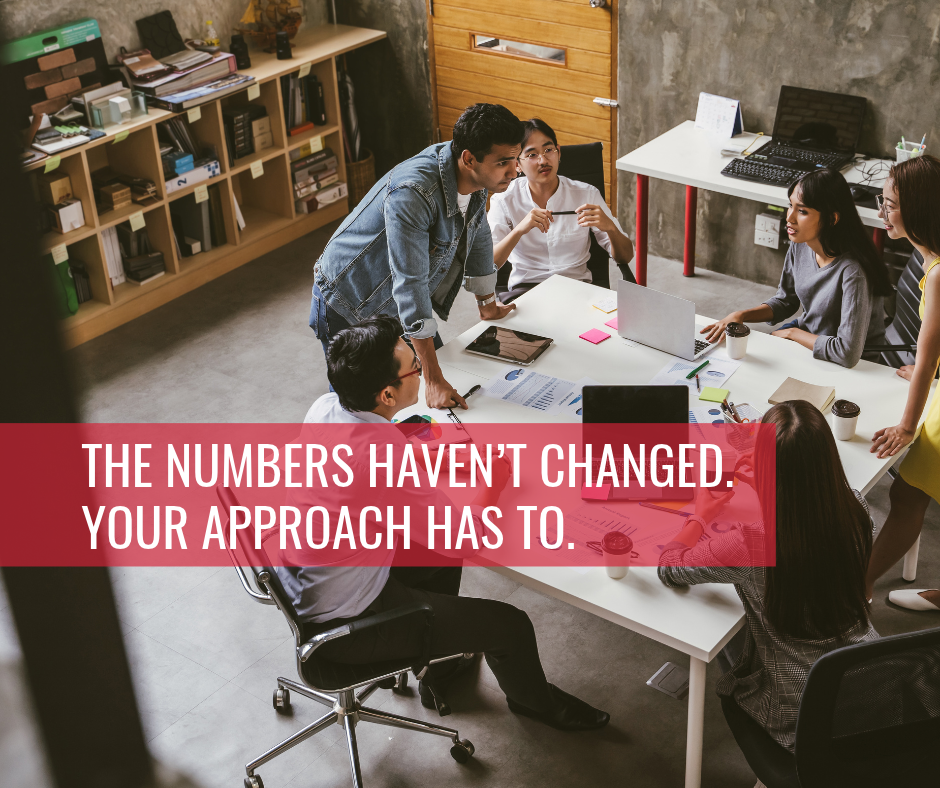
The numbers haven’t changed. Your approach has to.

In recent months our investigators have been called into two very different workplaces. One was an organisation working with children, responding to allegations under Queensland’s new Reportable Conduct Scheme. The other was a remote FIFO site, where a worker reported sexual violence.  Different industries, different people, different laws. The same lesson. By the time you

The numbers haven’t changed. Your approach has to. Read More »

Featured image for “Performance Management That Holds Up” showing an office desk with a laptop, performance charts, workflow documents and reports.

Performance Management That Holds Up: Why a Valid Reason Is Only Half the Defence

An engineer with thirty years’ experience was dismissed for genuinely substandard work. Missed deadlines. Quality problems. A welding error that halted a production line.  The Fair Work Commission accepted there was a valid reason to dismiss him. He won anyway — and was awarded compensation of $21,471.15 plus superannuation — because the employer had no formal performance management process and gave him

Performance Management That Holds Up: Why a Valid Reason Is Only Half the Defence Read More »

Featured image showing a workplace team collaborating, representing psychosocial risk management, psychological safety, and WHS compliance in Australian workplaces.

Managing Psychosocial Risks in the Workplace: Why a Policy Alone Won’t Protect You

What’s the real issue?  Having a psychosocial health and safety policy is not the same as managing psychosocial risk and regulators increasingly treat the gap as a breach. The most common mistake we see is treating this as an HR document rather than a WHS obligation owned by senior leadership exactly the “Band-Aid solution” the Model Code of Practice warns against.  A

Managing Psychosocial Risks in the Workplace: Why a Policy Alone Won’t Protect You Read More »

Featured image showing a diverse team of employees collaborating in a workplace meeting, representing employer leadership, workplace respect, and proactive prevention of sexual harassment under Australia's positive duty laws.

The Positive Duty Explained: How Australian Employers Prevent Sexual Harassment at Work

The biggest shift in Australian sexual harassment law is not a new penalty or complaint form. It is a change in who must act, and when.  Under the Sex Discrimination Act 1984 (Cth), employers now carry a positive duty — a proactive, ongoing obligation to take reasonable and proportionate measures to eliminate sexual harassment, sex discrimination, sex-based harassment, hostile work environments and victimisation, so far as possible. 

The Positive Duty Explained: How Australian Employers Prevent Sexual Harassment at Work Read More »

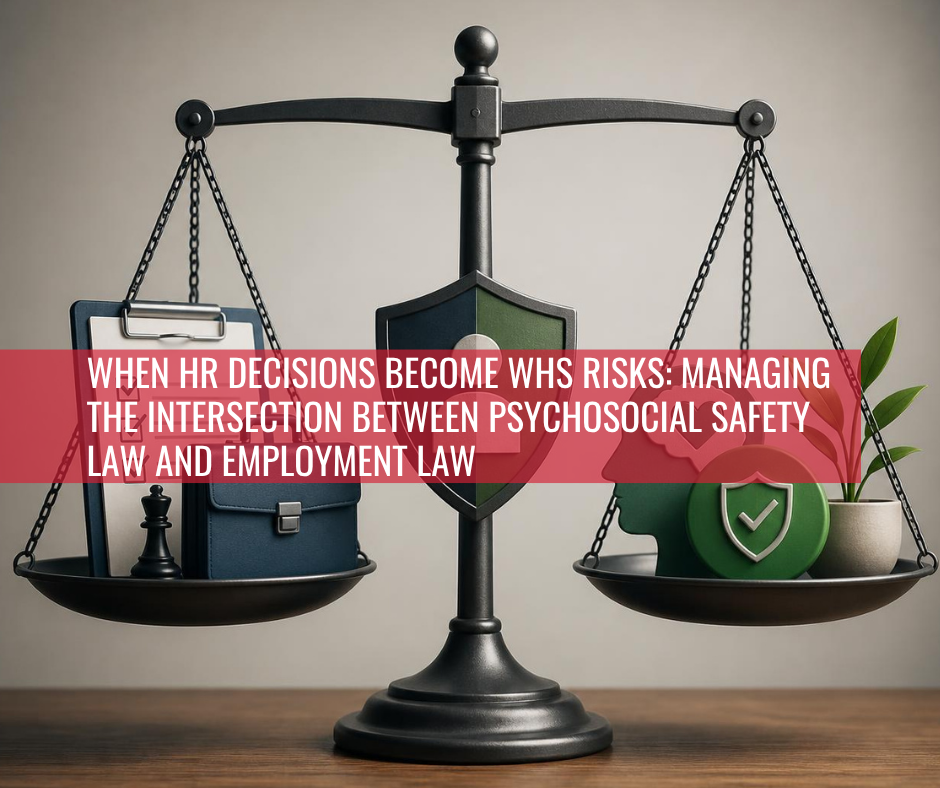
Featured image showing balanced scales with HR, legal, and psychological safety symbols, representing the intersection of employment law, WHS obligations, and psychosocial risk management in Australian workplaces.

When HR Decisions Become WHS Risks: Managing the Intersection Between Psychosocial Safety Law and Employment Law

Performance-manage an underperformer, restructure a team or investigate a bullying complaint, and you are no longer working within employment law alone. That decision now sits inside your work health and safety duty — and a process that is perfectly lawful under the Fair Work Act can still expose you under WHS legislation.  The answer is not to

When HR Decisions Become WHS Risks: Managing the Intersection Between Psychosocial Safety Law and Employment Law Read More »

Two business professionals reviewing workplace compliance documents in a modern office ahead of major Australian employment law changes taking effect on 1 July 2026.

What’s changing on 1 July 2026 — and what to do about it before it lands

Every July brings a wave of workplace law changes. Most years you can absorb them with a payroll update and a quick policy review. 2026 is not that year.  The changes landing on 1 July 2026 are structural — not cosmetic. They alter how super is paid, how parental leave is funded, what counts as

What’s changing on 1 July 2026 — and what to do about it before it lands Read More »

Mental Health First Aid at Work: Learn how employers can manage psychosocial hazards, meet WHS obligations, and build a compliant workplace mental health strategy.

Mental Health First Aid at Work: A Practical Guide for Employers

Mental health in the workplace is no longer a “nice to have” conversation — it is a business-critical priority.  In a recent HR Bites webinar, I explored the role of Mental Health First Aid at Work within a broader workplace mental health strategy, and the practical steps employers can take to manage psychological risk, meet

Mental Health First Aid at Work: A Practical Guide for Employers Read More »

Psychosocial Hazards and EI

Want to Minimise Psychosocial Hazards in your Workplace? Try Boosting Your Organisation’s Emotional Intelligence.

The concept of emotional intelligence (EI) has been in play for more than 30 years and has been very heavily studied during that time.  We know that individuals with good emotional intelligence generally have better health, a better career, are seen as more trustworthy, achieve higher performance, productivity and profitability than individuals that do not. 

Want to Minimise Psychosocial Hazards in your Workplace? Try Boosting Your Organisation’s Emotional Intelligence. Read More »

Scroll to Top