Risk Management

Featured image showing an open office doorway leading to a workplace, symbolising an employee's return to work, injury recovery, workplace reintegration, and employer responsibilities under Australian employment and WHS laws.

Return to Work Under Pressure: Managing Injury, Capacity and Employer Risk in the Australian Workplace

Managing ill and injured employees is one of the highest-risk tasks any Australian employer faces. When a worker is injured or falls ill, several legal regimes switch on at once — and they don’t always agree. Get it right and you protect your people and your organisation. Get it wrong and one termination can trigger multiple claims.  Here’s how to do it —
Return to Work Under Pressure: Managing Injury, Capacity and Employer Risk in the Australian Workplace Read More »

Featured image showing a clock and office telephone symbolising the critical first 48 hours after a serious workplace incident, highlighting the urgency of employer response, WHS compliance, and incident management.

The First 48 Hours After a Serious Workplace Incident: An Employer’s Response Plan

When a worker is killed or seriously injured at work, the first 48 hours shape everything that follows — your legal exposure, your standing with the WHS regulator, the wellbeing of your people, and your ability to defend any future prosecution. The best predictor of a good response is having an incident-response plan ready before anything happens. 

The First 48 Hours After a Serious Workplace Incident: An Employer’s Response Plan Read More »

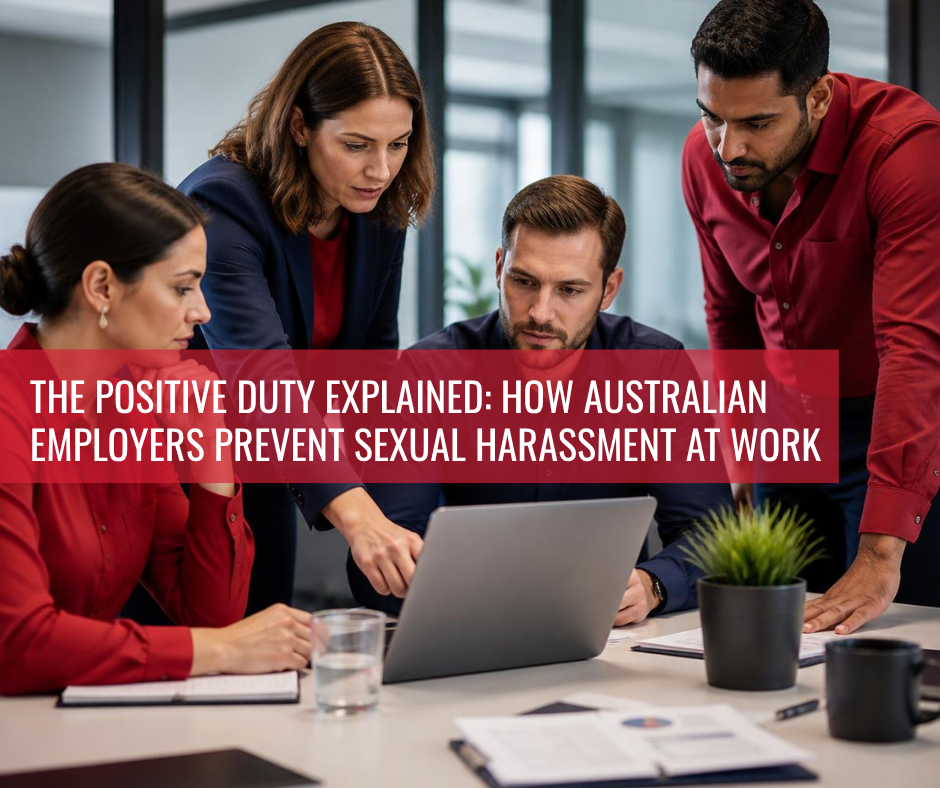
Featured image showing a diverse team of employees collaborating in a workplace meeting, representing employer leadership, workplace respect, and proactive prevention of sexual harassment under Australia's positive duty laws.

The Positive Duty Explained: How Australian Employers Prevent Sexual Harassment at Work

The biggest shift in Australian sexual harassment law is not a new penalty or complaint form. It is a change in who must act, and when.  Under the Sex Discrimination Act 1984 (Cth), employers now carry a positive duty — a proactive, ongoing obligation to take reasonable and proportionate measures to eliminate sexual harassment, sex discrimination, sex-based harassment, hostile work environments and victimisation, so far as possible. 

The Positive Duty Explained: How Australian Employers Prevent Sexual Harassment at Work Read More »

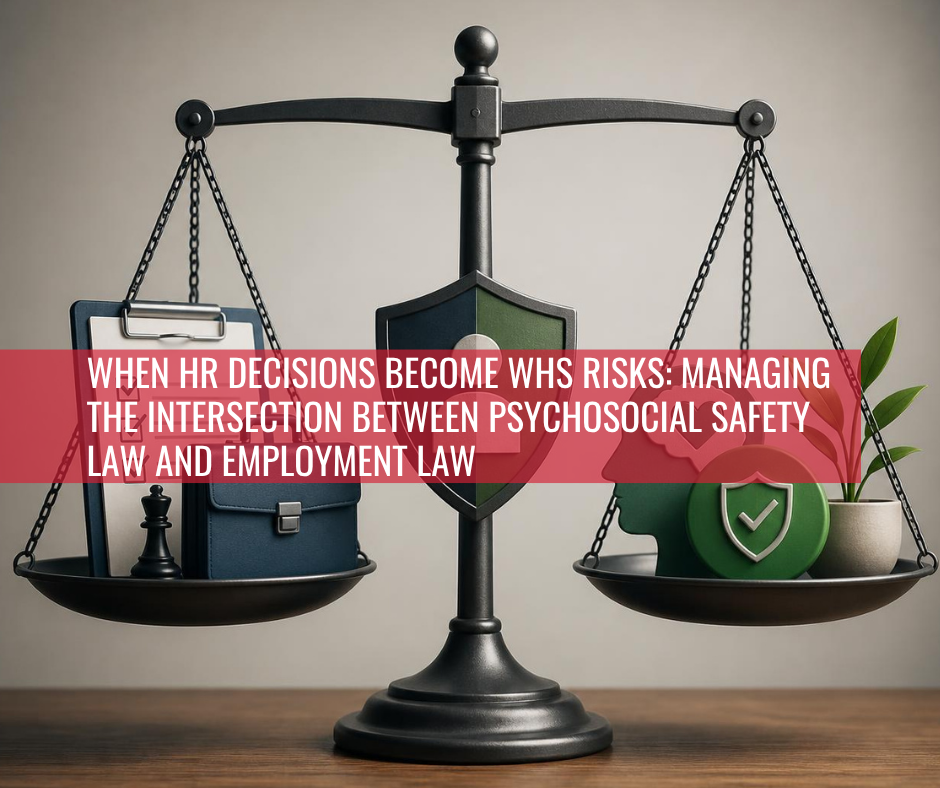
Featured image showing balanced scales with HR, legal, and psychological safety symbols, representing the intersection of employment law, WHS obligations, and psychosocial risk management in Australian workplaces.

When HR Decisions Become WHS Risks: Managing the Intersection Between Psychosocial Safety Law and Employment Law

Performance-manage an underperformer, restructure a team or investigate a bullying complaint, and you are no longer working within employment law alone. That decision now sits inside your work health and safety duty — and a process that is perfectly lawful under the Fair Work Act can still expose you under WHS legislation.  The answer is not to

When HR Decisions Become WHS Risks: Managing the Intersection Between Psychosocial Safety Law and Employment Law Read More »

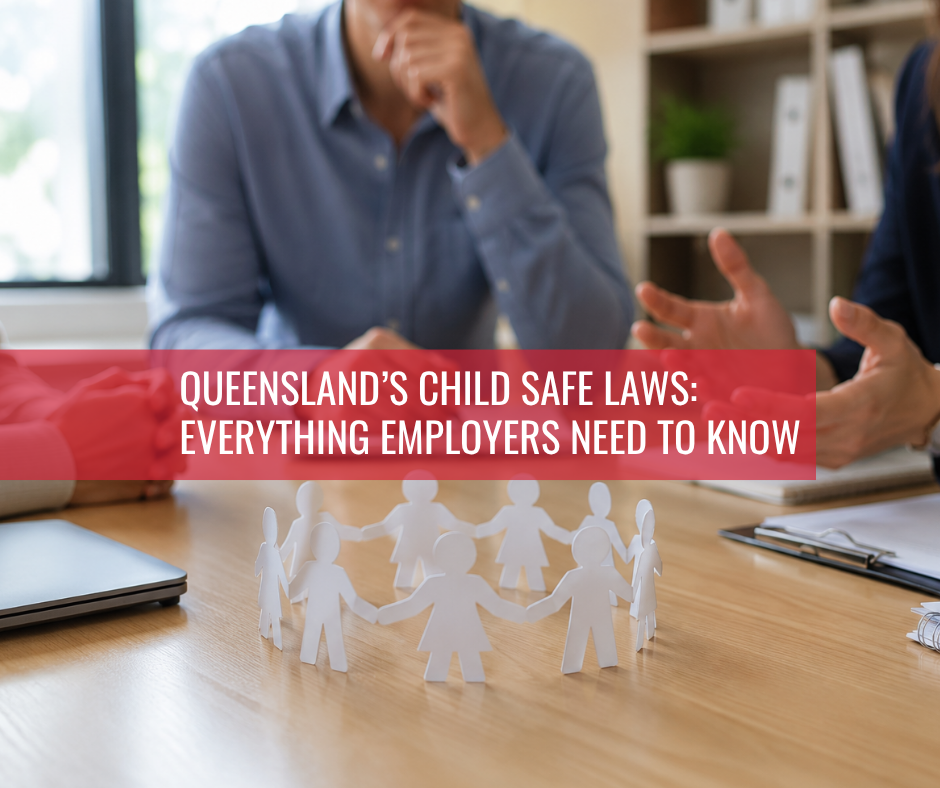
HR professionals discussing Queensland Child Safe Laws, Child Safe Standards and employer compliance requirements.

Queensland’s Child Safe Laws: Everything Employers Need to Know

I want to start with a number. 28.5%. That is the proportion of Australians who have experienced child sexual abuse, according to the 2023 Australian Child Maltreatment Study. Of those, approximately 75% experienced it more than once. These are not rare events. This is not a problem confined to certain families or certain communities. This

Queensland’s Child Safe Laws: Everything Employers Need to Know Read More »

Mental Health First Aid at Work: Learn how employers can manage psychosocial hazards, meet WHS obligations, and build a compliant workplace mental health strategy.

Mental Health First Aid at Work: A Practical Guide for Employers

Mental health in the workplace is no longer a “nice to have” conversation — it is a business-critical priority.  In a recent HR Bites webinar, I explored the role of Mental Health First Aid at Work within a broader workplace mental health strategy, and the practical steps employers can take to manage psychological risk, meet

Mental Health First Aid at Work: A Practical Guide for Employers Read More »

Scroll to Top