
Flexible Work Arrangements

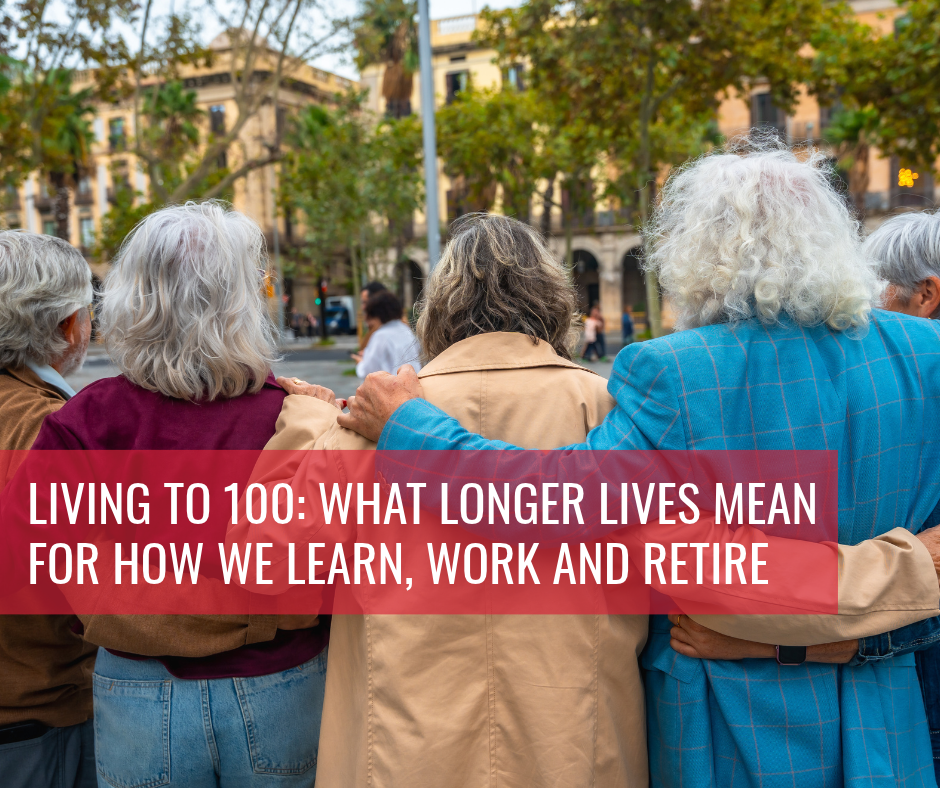
Group of older adults standing together outdoors with their arms around one another, representing healthy ageing, social connection and longer lives. Text overlay reads “Living to 100: What Longer Lives Mean for How We Learn, Work and Retire.”

Living to 100: what longer lives mean for how we learn, work and retire

My daughter finishes high school this month. As she weighs up courses, gap years, jobs and travel, I’ve been thinking about how different her working life will be from mine. And how different mine is turning out to be from my parents’.  In The 100-Year Life, London Business School professors Lynda Gratton and Andrew Scott

Living to 100: what longer lives mean for how we learn, work and retire Read More »
Modern office workspace with a laptop, tablet, notebooks and an empty chair, featuring the article title “Flexibility and Permanency Are Being Legislated. Don't Bury Your Head in the Sand.”

Flexibility and permanency are being legislated. Don’t bury your head in the sand.

Every week I hear some version of two sentences. “We don’t do work from home here.” And “Our casuals like being casual.”  Both may be true. Neither is a strategy anymore.  Across federal and state governments, the Fair Work Commission and the courts, the direction is clear. Flexibility is moving from perk to entitlement. Insecure

Flexibility and permanency are being legislated. Don’t bury your head in the sand. Read More »

Scroll to Top