Workplace Compliance

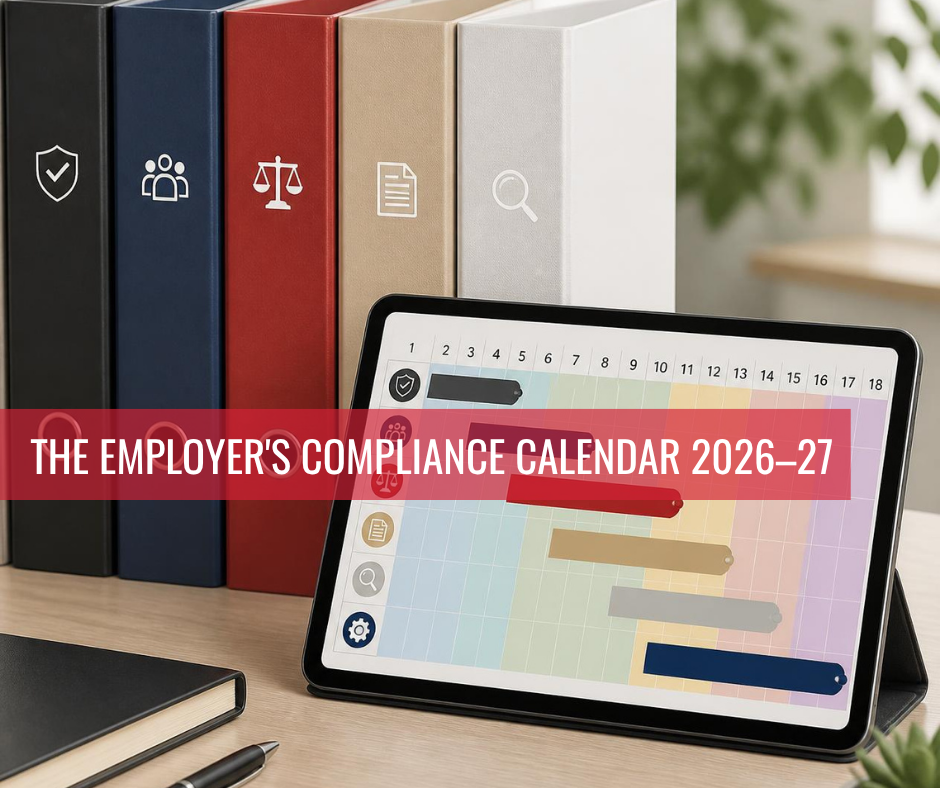
Featured image for The Employer’s Compliance Calendar 2026–27 showing a digital compliance timeline alongside workplace policy and legal folders.

Six Changes, Eighteen Months: The Australian Employer’s Compliance Calendar for 2026 and 2027

Most employers do not get caught out by the law they never heard of. They get caught out by the change they heard about, filed away, and did not diarise.  Between 1 July 2026 and the end of 2027 there are six separate changes with hard start dates, each requiring a different function to act — payroll, HR,
Six Changes, Eighteen Months: The Australian Employer’s Compliance Calendar for 2026 and 2027 Read More »

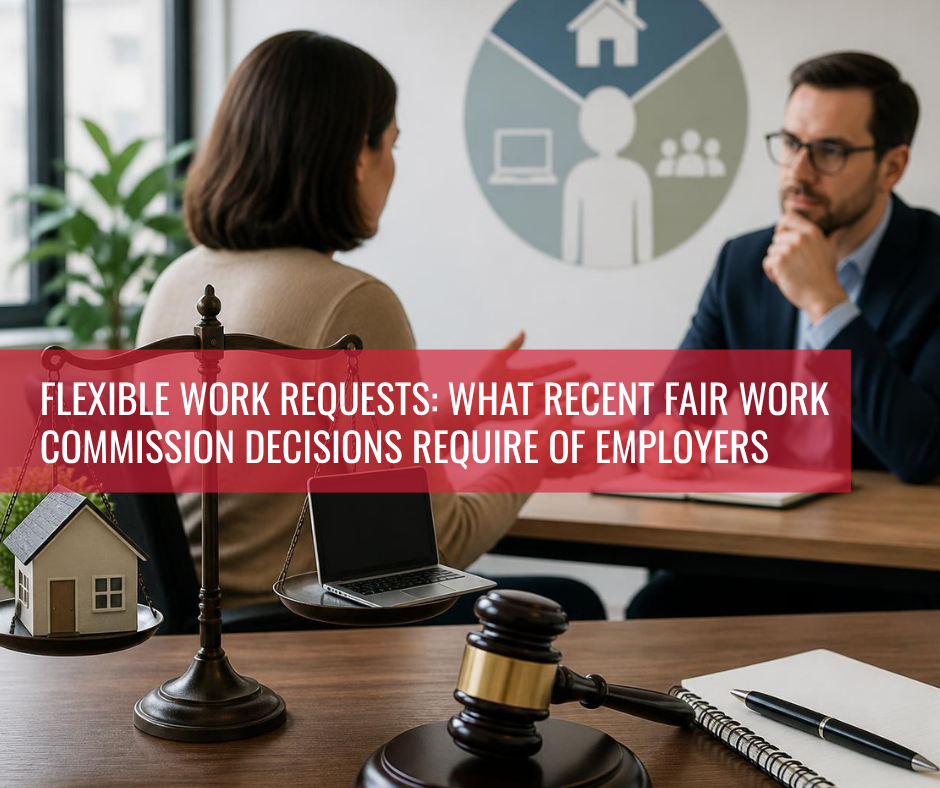
Manager discussing a flexible work request with an employee across a desk, with legal symbols including scales of justice, a gavel, and hybrid work icons representing Australian workplace flexibility and Fair Work compliance.

Flexible Work Requests: What Recent Fair Work Commission Decisions Require of Employers

What’s the real issue?  Since the 2023 changes to the Fair Work Act 2009 (Cth), how you handle a flexible work request now matters as much as whether you say yes or no. Under section 65B, the Fair Work Commission (FWC) can now arbitrate refused requests — and order you to grant one anyway if you did not follow the

Flexible Work Requests: What Recent Fair Work Commission Decisions Require of Employers Read More »

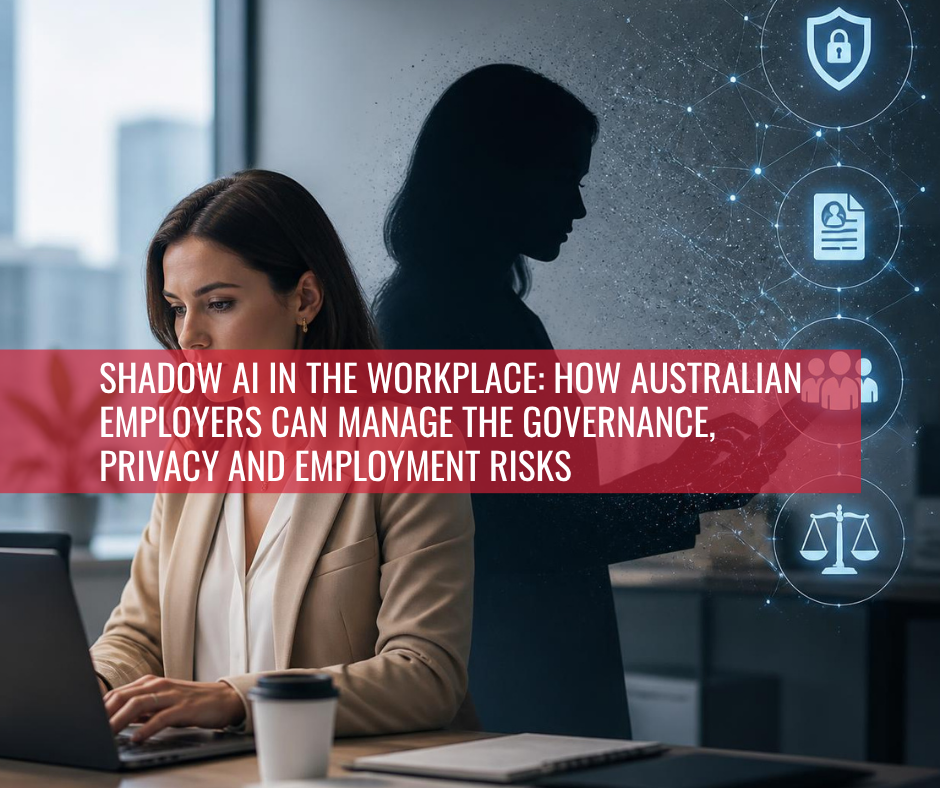
Professional working on a laptop with a shadow silhouette and digital security icons representing AI governance, privacy, and employment risks in the workplace.

Shadow AI in the Workplace: How Australian Employers Can Manage the Governance, Privacy and Employment Risks

Shadow AI is the use of artificial intelligence tools by employees for work — without the employer’s knowledge, approval or oversight, usually through public generative AI chatbots opened straight from a browser.  The answer is not a blanket ban, which simply drives use underground. The answer is governance: a clear AI acceptable-use policy, staff training, clear data rules, human

Shadow AI in the Workplace: How Australian Employers Can Manage the Governance, Privacy and Employment Risks Read More »

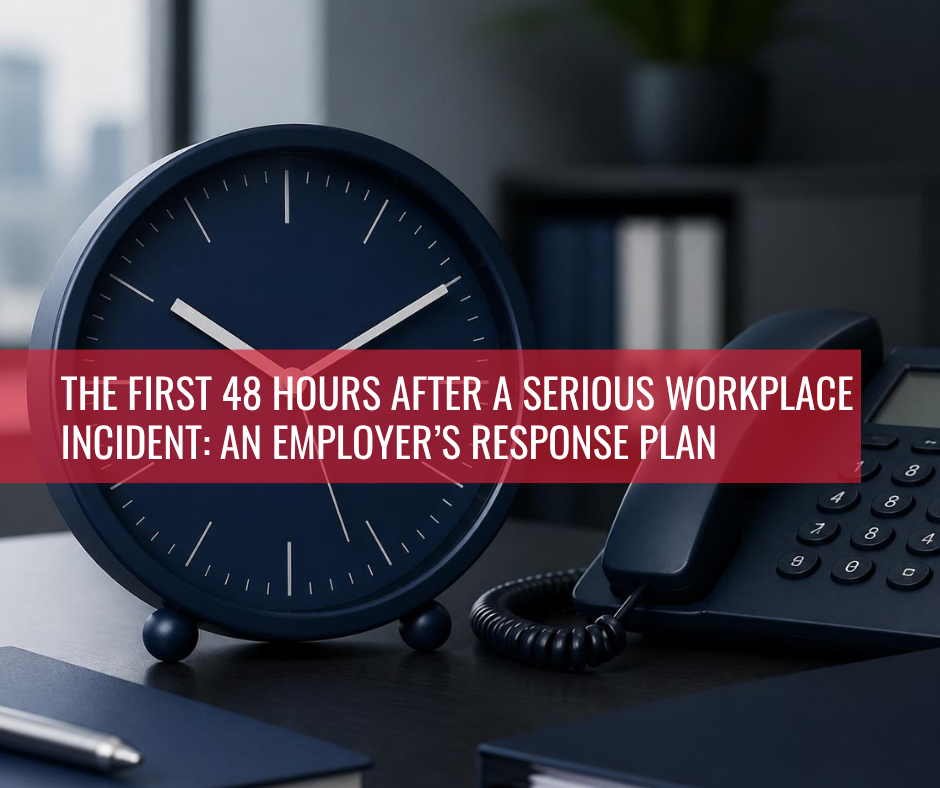
Featured image showing a clock and office telephone symbolising the critical first 48 hours after a serious workplace incident, highlighting the urgency of employer response, WHS compliance, and incident management.

The First 48 Hours After a Serious Workplace Incident: An Employer’s Response Plan

When a worker is killed or seriously injured at work, the first 48 hours shape everything that follows — your legal exposure, your standing with the WHS regulator, the wellbeing of your people, and your ability to defend any future prosecution. The best predictor of a good response is having an incident-response plan ready before anything happens. 

The First 48 Hours After a Serious Workplace Incident: An Employer’s Response Plan Read More »

Fair Work Crackdown on Migrant Worker Breaches: Key Lessons for Employers

Fair Work Crackdown on Migrant Worker Breaches: What Recent Cases Mean for Employers

Recent enforcement action by the Fair Work Ombudsman highlights a clear regulatory focus: protecting migrant workers and addressing workplace underpayments. In December 2025 alone, the regulator announced legal action and penalties across several industries — including agriculture, financial services and transport. While the circumstances differ, the underlying message is consistent: employers must ensure migrant workers

Fair Work Crackdown on Migrant Worker Breaches: What Recent Cases Mean for Employers Read More »

Scroll to Top